

A Havana Retrospective
Gut punch travel at its best
Most of my friends travel to relax. Occasionally, I do, too. But I also go places to be uncomfortable—and challenged, and maybe even changed. The seven days I spent in Havana in late January checked all those boxes.
My weeklong stay in Havana was like a punch to the gut in all the best ways. Tougher and more rewarding than I could have imagined, visiting Havana renewed my appreciation for everything about my abundant American life, even its currently dysfunctioning democracy. (Not proper English but to use dysfunctional suggests a certain permanence I’m not willing to allow—yet).
I could have done without the inconvenient food poisoning on Day 5 that found me 30 minutes into a visit at the Museum of Afro Cuban History. I’ve never been so grateful for a marble stair landing in my life. I hung out there for 30 solid minutes until the nausea passed.
This was not a random undertaking. Cuba’s been on my “Before Death” list since the days when my mortality was far less of a concern. The question wasn’t so much if or when but how. For decades I waited for the opportunity—when it finally did, I jumped on it without thinking what it would involve, which is not typical of me.
Where It Began
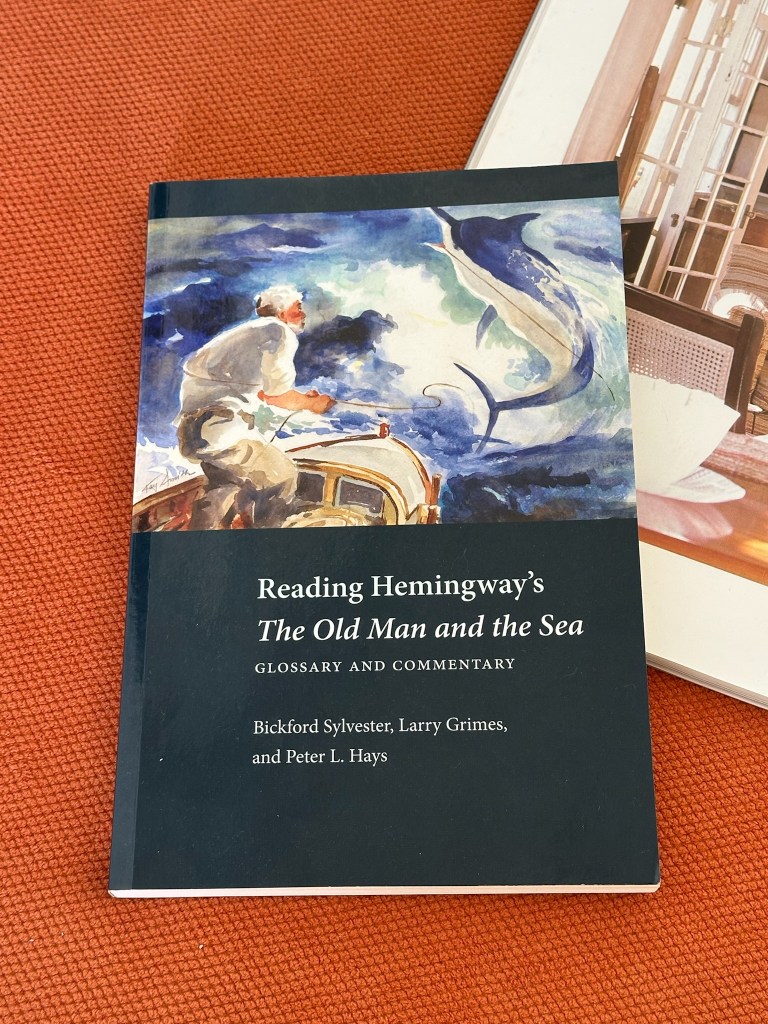
Since reading Old Man and the Sea in high school, I’ve wanted to visit Cuba and experience the smells, colors and “glow of Havana” conveyed in Ernest Hemingway’s seminal novel about a man bested by beast.
I’d seen the pictures of 21st century Cubans driving beat up 20th century American Chevys and Cadillacs and glimpsed its Easter egg colored, post-colonial streetscapes, faded with time and crumbling with neglect. I wondered how Cuba would compare to other communist countries I’d visited. My first novel, What Birds Know (now out for agent submission), spends a chunk of the narrative in the former East Germany; another former communist-controlled nation state which fell at huge personal consequence to my protagonist, Thomas. Those cash-strapped countries had a retro quality I, a devoted time traveler, found fascinating. And frustratingly off limits.
Since Fidel Castro and his communist revolutionaries overthrew a U.S.-backed military dictatorship there some 65 years ago, Americans tourists have been prohibited from visiting Cuba. A made-in-the-U.S. rule, the ban—along with decades of trade sanctions—was meant to deprive Cuba’s government of the tourist dollars it needed to rebuild the country.
I know Americans who found a way to go through Mexico and Canada or Europe, where there were no travel bans to Cuba in place. Worried about anything that might flag my passport with U.S. immigration, I resisted those options, waiting for diplomat relations to loosen, which they did for a hot second—before tightening back up.
Regimes can change, fail and even disappear. You won’t find East Germany (where What Birds Know is set) on any present day map. Never satisfied with just seeing one side of an ideological coin, I wanted to visit Cuba before it changed into something else, politically and otherwise.
An Unexpected Invite
Out of the blue, my lifelong friend Melanie tells me last fall she is planning to spend a month in Cuba in early 2025. “Want to join me?” she asked.
“Yes” and “How” were the first two words out of my mouth.
To legally travel to Cuba, I needed to qualify for one of the twelve authorized travel categories mutually agreed upon by the two governments. Drinking mojitos, listening to Afro-Cuban jazz, and saltwater fly fishing were not on the list. My choices were to go as a journalist, which seemed risky, or as a humanitarian. Following Mel’s lead, I opted for the latter and agreed to transport a giant blue suitcase filled with medical supplies organized by the U.S.-based non-profit, Not Just Tourists.


Melanie, who would be traveling ahead so she could see other parts of the country, promised to meet me at our Casa Particulares, a private home operating as a hostel.
As companions go, Mel is that grittiest of travelers. A retired school-teacher-park ranger with a passion for improving indigenous studies in the U.S. and elsewhere, she’s an avid roamer, taking to the road for weeks at a time, sleeping alone in her four-wheel drive with its camper shell. Given her travel credentials, I was honored she’d asked me to be her companion for a week.
Older than I am, Mel’s known me since I was still in my crib. With my baby days long past, I knew I’d need to bring my A—as in “Adult”—game to Havana. While I’ve traveled with Mel’s mother, who is my mom’s best friend, this was our first ever trip together.
Rum, Coke and Rations
Giant blue suitcase and travel visa in hand, I flew from San Francisco to Havana (via Houston) on a Saturday night the last week of January, hard cash (more on money challenges below) stashed inside my clothes and backpack.
There’s a lot to take in so be prepared. A day in Havana can be like a week somewhere else. Cuba’s most populous city, Havana is a sprawling Caribbean metropolis, occupying some 281 miles of densely populated area. Opting for stays in hostels versus hotels, Mel and I were able to experience a bit more of what Havana life is really like outside of its “curated” tourist hub in the Old Town.
Old Havana, the part of the city most Americans tend to know best for its colonial buildings, quaint squares and legendary haunts (including two of Hemingway’s waterholes), is just one piece of the colorful jigsaw puzzle that is greater Havana.
“You are staying in the real Havana,” said Ciara, the self-employed guide referred to us by some Brazilian travelers staying at our same hostel. A mother of two getting by on government rations and the tips from her “free guiding,” lived in the same district as where we were staying, Vedado. While not always convenient, staying in the Vedado and Centro neighborhoods allowed Mel and me a tiny taste of what ordinary life in Havana might be like on a day-to-day basis. Lacking the tourist draw of Old Havana, these neighborhoods—mostly neglected by the cash-strapped communist government—are where Havana’s true past, present and future collide.


Faded with age and hobbled by neglect, the Havana I encountered there reminded me of a once beautiful old woman whose looks have faded except in the eyes, which sparkle as brightly as ever. It is in these neighborhoods one finds empty mansions, abandoned during the revolution, crumbling in place; restored townhouses repurposed as medical offices, Internet cafes and multi-family flats; make-shift markets and neighborhood restaurants stuffed inside tiny metal sheds. Add to this a boxy, Soviet style apartment buildings—its square windows festooned with its inhabitants’ laundry. Overgrown shade trees, spread-wide over cracked sidewalks, beg for attention—from whom I’m not sure.
Walk far enough and you might hit the Paseo, where a gleaming boutique hotel with the same name, stands hopeful amid the surrounding blight. Chevys and Cadillacs and Soviet cars from the last century—the first half of the last century—crowd the city’s wide arteries, leaving you to feel like an abandoned time traveler.
If it sounds chaotic, well, it is. While Havana “real” can be overwhelming, at times, it’s also hugely invigorating, too. Aficionados of music, art, history, politics, cocktailing and fishing will have plenty of options to choose from throughout the city.
Music pulsates throughout these neighborhoods, unifying them into this weirdly wonderful Afro-Latin-Colonial-Communist-Cuban mash-up. Meanwhile, excellent art installations abound—on murals and in hipster hotels like Malecón 663.
Visually appealing as it is, Cuba is not for sissies. When a local man asked Melanie about her travels around the country and she remarked that it was “hard,” he smiled politely and said simply, “It’s much harder for Cubans.”
Misappropriated since the days when Christopher Colombus claimed Cuba for Spain and made her its colonial capital, Havana puts on a good face. Under the surface, however, the city and its people are treading water like a one-legged whistling duck (a water bird common to that part of the Caribbean).
U.S. sanctions, in place since the 1960’s, exact their pound of flesh from the Cuban economy almost daily. It’s all the socialist government can do to keep the lights on, as regular power outages in other parts of the country prove. (Mel went at least a day without power in one of the fincas where she was staying near the colonial town of Trinidad).
Rations are real once you move outside of the major tourist spots. At our hostels, we enjoyed one cup of lovingly brewed coffee and not an ounce more. Slimmed down restaurant menus where an egg or chicken might be available—or not. Power outages. Spotty WiFi. Empty grocery and pharmacy shelves are all par for the course when navigating Havana.
While Fidel and his brother, Raoul, continue to be deified, no one I met was wild about the current president, Miguel Díaz-Canel. Will that discontent translate into regime change? I have my doubts
Being uncomfortable in Havana, I was reminded of all the conveniences I take for granted including over-the-counter medicine and purified water. One of our hosts, Lulu, had to hunt down heart medicine for his wife who suffers from high blood pressure. Witnessing the couples’ stress brought home how lucky I am to live in America where prescription drugs are expensive, yes—but also more readily available.
Yet, of all the cities I’ve visited in the world, Havana takes the prize for “nicest people” ever. Over and over, I witnessed taxis drivers go out of their way to make room for fellow drivers; I saw pedestrians help one another lift and carry and cope with ruined streets. Problems are shared and solved collectively.
Here’s something else: not once during my stay in Havana did anyone take me to task about my citizenry or America’s punitive stance against their government.


A generosity of spirit more Caribbean than communist is what I took away from my exchanges with local Habaneros. Arianna. Diana. Lula and her husband, Lulú. Franco. Camilla. That nice guy who drove us around in his coconut taxi. Add to the list the clinic director who accepted the medical supplies I brought from California.
I’d do it all again. Okay, maybe not the food poisoning. But everything else.
Thoughts on If You Go and Some Post Notes
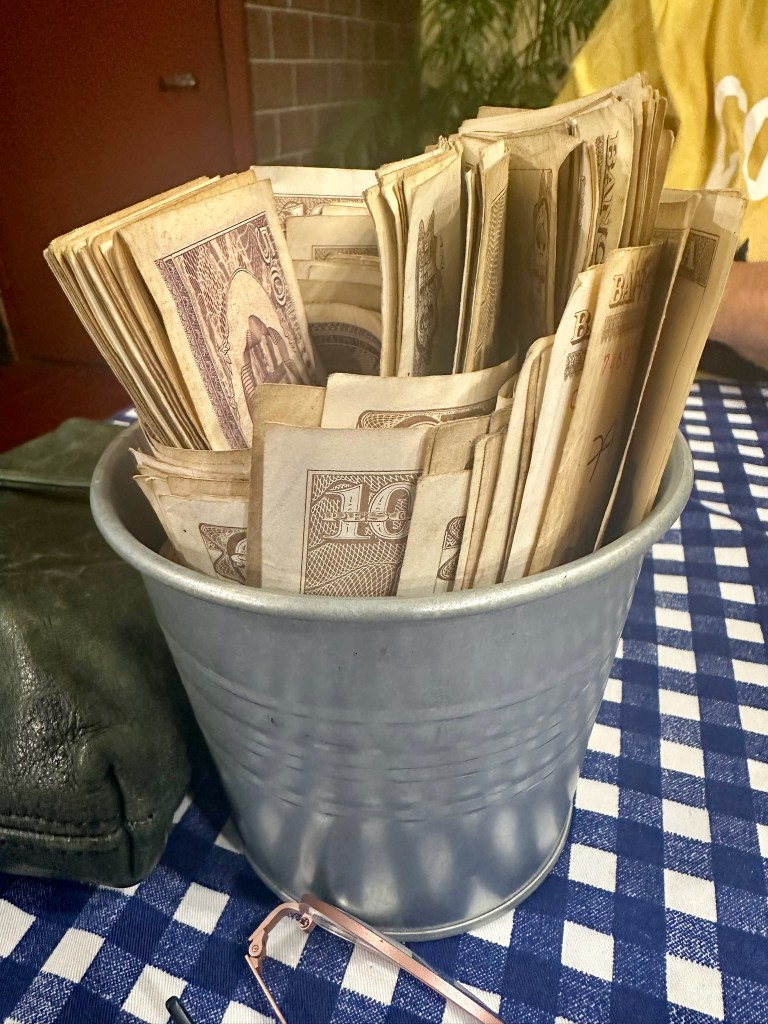
If You Go — Bring cash, lots of it. As of this writing, it is not possible to wire money to and from Cuba as all Western Union offices were shut down during the last Trump administration. Need to change or rebook your airline flight? The online portals operated by U.S.-based airlines won’t be able to process the payment required—so have someone on deck at home to do this for you. Be prepared to be creative. Mel, who needed a cash infusion, wound up calling her Puerto Rican brother-in-law who knew someone in Miami who knew a courier willing to transport arranged funds. Our guy showed up in the morning on a moped wearing a fanny pack full of American greenbacks.
In addition to cash, consider taking a suitcase full of medical supplies provided by the U.S.-based nonprofit, Not Just Tourists.
Hunting for Hemingway — If you did nothing more than follow in the footsteps of Hemingway for a week, you’d encounter two lively bars with excellent live music, a roof top view as inspiring as any in Latin America atop the Ambos Mundos, the historic hotel where the great author wrote many of his best books. For $50 bucks or less you can travel roundtrip to Cojimar, the fishing village where Hemingway and his friend, Gregorio Fuentes, the real “Old Man and the Sea,” set out on their storied angling trips. Mel and I spent an afternoon there visiting the bar where Hemingway spent countless hours boozing, eating and conjuring characters. There is also Finca Vigia, spanish for the Lookout Farm, 30 minutes southeast of Havana, where the author spent a significant chunk of his later years. It is now home to the government-run Hemingway Museum.


1 Comment
Wow, Holly, I am impressed. You REALLY captured the place and the people, and made me smile several times. Wonderful job.
Comments are closed.