
A Walk in Reverse
On Choice, Consequence and Historic Possibility
Continued from my previous post, the Big Dilemma.
This week I will make history. I will do so by voting in America’s 60th consecutive federal election, a tradition first begun in 1789. My choice for president, which shall remain nameless for the sake of neutrality, will become part of a historical record that will be scrutinized for years to come.
This blog post isn’t about the choice I will make tomorrow. It’s about the choice I won’t make.
Allow me to explain.
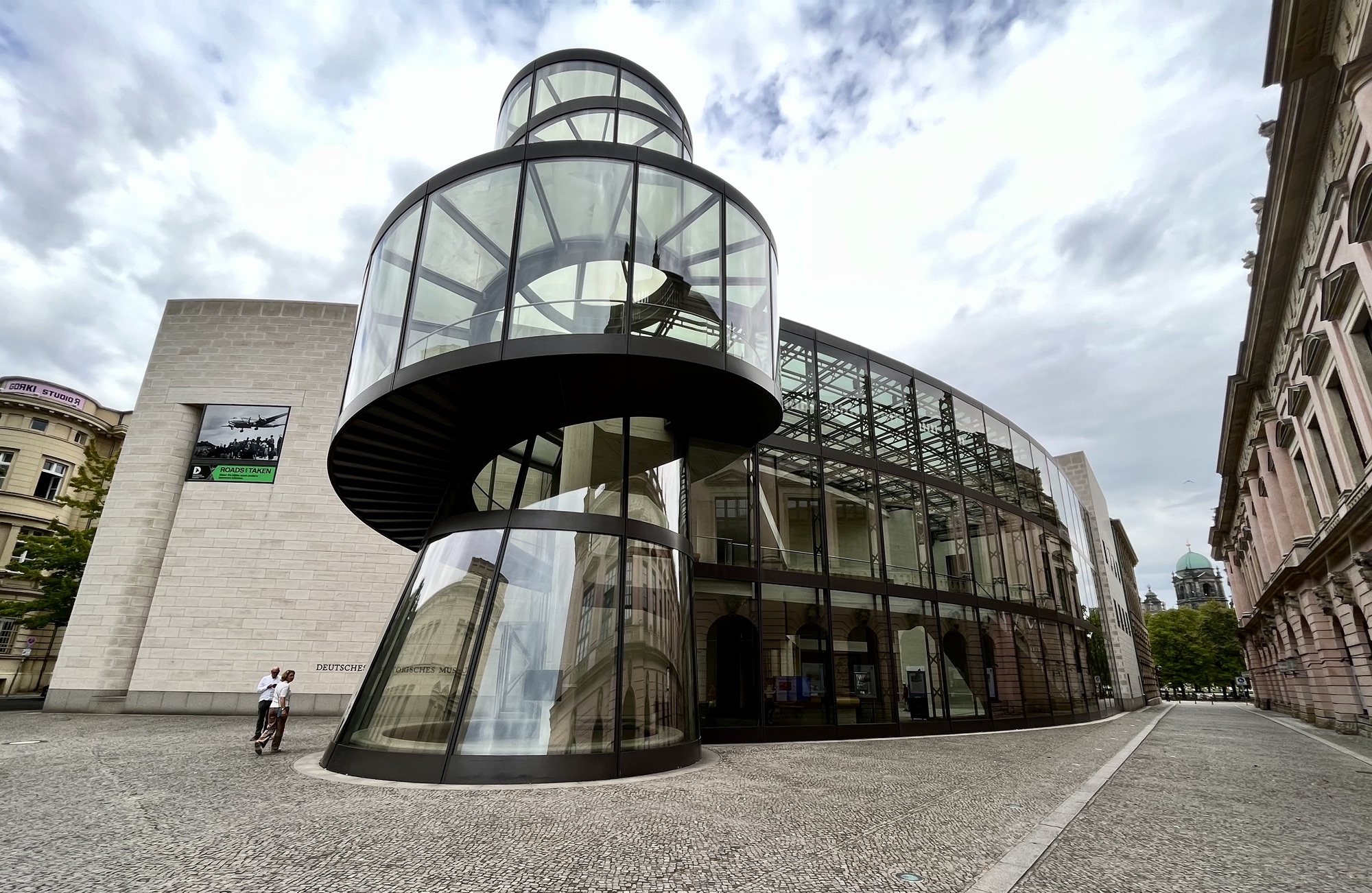
About this time a year ago I was in Berlin staying with my dear pal and research partner, Nora. During my stay, Nora, a thirty-something hipster who lives in Berlin, suggested we check out an exhibition at the German Historical Museum titled, “Roads Not Taken: Or Things Could Have Turned Out Differently”.
The exhibit, which runs until January 2026, completely up-ended the way I think about the making and marking of history, including my own.
Here’s how it went down:
Nora and I were walking a curated timeline of modern German history that began with the fall of the Berlin Wall and worked backward in chronological order to its founding as a nation-state in 1848. Historic events were laid out along panels, some dynamic (see video), that juxtaposed historic fact versus historic possibility. A path that was anything but linear.
By pushing museum goers in a present-to-past direction, the curators hoped to inspire “contingency” thinking while “shining a light” on the alternative outcomes that were possible at the time.
There’s nothing like working backward through historical time, asking, what if that, instead of this, to make a person recognize the possibility inherent in our choices—political, social and otherwise. I majored in European history in college and while I had some very good professors, I don’t recall any who framed historical events in such an alternative manner.
To think this way requires an adjustment. For example, placing side-by-side two seemingly unrelated events, the curators presented museum goers with a dynamic display that alternated between a celebratory picture of German protesters sitting astride the Berlin Wall waving flags and a grim shot of military tanks facing off against unarmed civilians in Beijing’s Tiananmen Square months earlier.
I, who had never connected those two events before, was surprised to learn how East Germany’s leaders had initially praised the Chinese government for its brutal crackdown and had considered using similar state-inflicted violence on their own people in November 1989. Beleaguered by their bankrupt government and dimming Soviet support, the German Democratic Republic ultimately chose a different, more peaceful path, laying the groundwork for eventual reunification.
Whatever relief I felt at the good choice made that day in Berlin was wiped out by the time Nora and I reached the portion of the exhibit devoted to 1930’s Germany and the rise of Hitler’s Third Reich.
Until that day in the museum, I’d mostly viewed Hitler’s rise to power, anomalous as it was, as an inevitability due to a sequence of cascading events. His ascent, I reasoned, started with fall-out from the first World War leading to the hammering Germany took during the Great Depression, followed by the weakening of Weimar Republic under Paul von Hindenburg.


While events of the time created the space and environment befitting a charismatic but unstable figure like Hitler, they did not bestow him and his Nazi party with parliamentary votes, any more than events appointed him chancellor or awarded him popular legitimacy. People did.
Cheeks were turned, self-interests advanced, fear was cultivated, lies were spread, the parliament voted, much of the Depression weary populous celebrated, seeing in their new leader, a new, more prosperous day. The decision to allow Hitler to lead Germany was not a given but a choice.
It’s true, Hitler as chancellor, restored Germany’s post-Depression economy in record time as he pumped money into industry and public works, but the cost. Oh, the cost.
In the 12 short years Hitler ruled Germany, he directed the military invasion of some 20 countries, started a world war, murdered six million Jews along with countless other innocents, displaced whole populations, destroyed cities, split his country (Germany—East and West), and prompted the creation of another (Israel) creating more displacement and conflict.
The Germans I know today are incredibly thoughtful people who deliberate back and forth over the best way forward as individuals and citizens. They know by walking around their reconstructed cities filled with Holocaust memorials the peril of adhering to a single path, ideological or otherwise. However, the problem with this perspective is that it frames historical outcomes almost like they were foregone conclusions.
History is so much more than a collection of happenings; it is chronicle of human choice and lived consequence. It is true for our personal histories as well as collective histories. Except for events that take place in the natural world, humans make their history, on foot, one choice at a time.
As I write these words, I can hear Robert Plant in my ear, singing Led Zeppelin’s Stairway to Heaven—
“There are two paths you can go by, but in the long run, there’s still time to change the road you are on.”
There is no going back, I know, except to consider what could have been. That said, the American experience is more than a singular path but many paths, with many junctures in which to change course.
The way forward is only as fixed as you and me—and our future choices—allow it to be.

2 Comments
Terrifyingly timely and important. Often attributed to Thomas Jefferson “The government you elect is the government you deserve ” or perhaps Alexis de Tocqueville: “In democracy we get the government we deserve”
Whoever, here we are because of our choices.
Comments are closed.